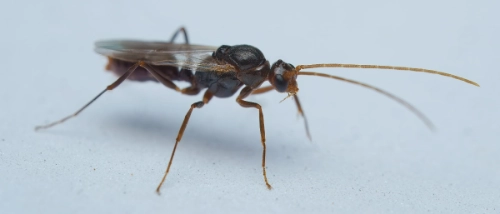
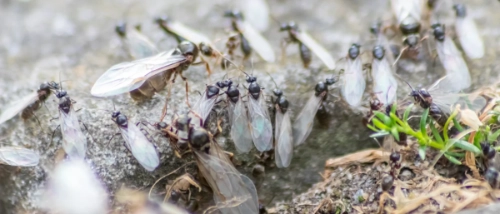
Flying ants and termites produce winged colony members when it’s time to reproduce. They’re called swarmers, and they typically leave the nest in large groups to mate and start new colonies.
Here’s the difference: most flying ants won’t survive long after leaving the colony, and those that do usually settle outdoors. Termite swarmers can shed their wings and begin building a new colony inside wood or soil near your home. That’s why a few winged ants outside might not be a big deal, but even a handful of flying termites indoors should definitely be taken seriously.
To sum up the main differences between these two pests:
- Male flying ants are short-lived and usually establish nests outdoors
- Termite swarmers shed their wings and may build new colonies inside wood or soil
- Even a small number of termites indoors can be an early warning sign of a larger infestation.
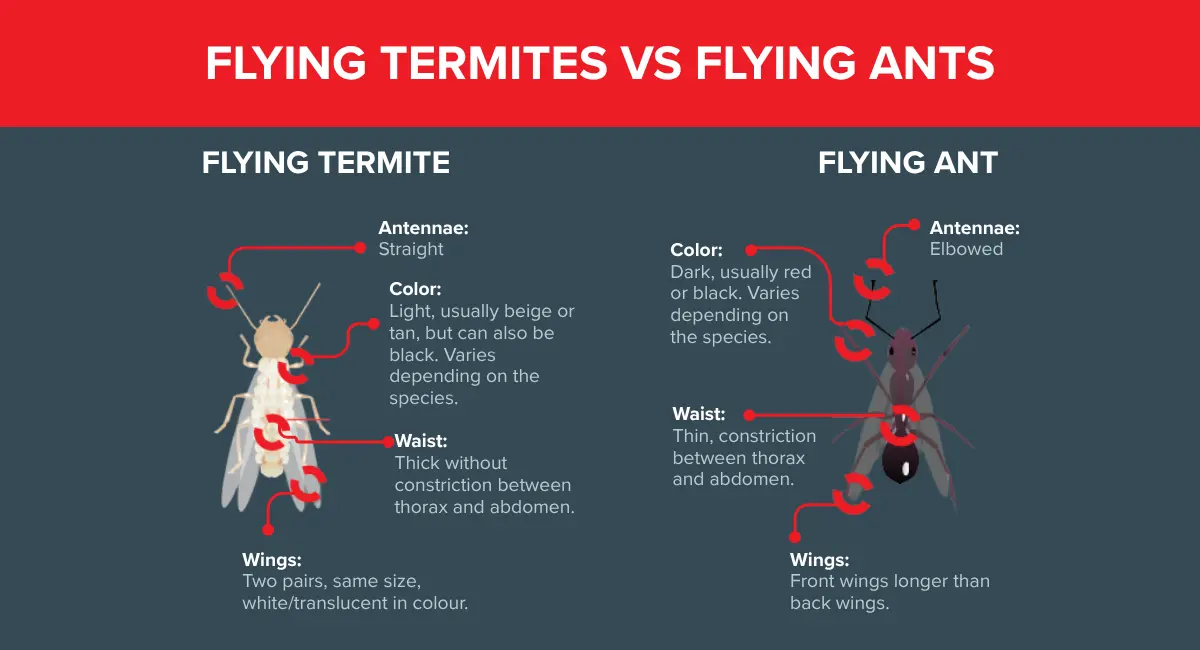
These two pests are often mistaken for one another because they share some traits. Both are social insects that live in colonies, both produce winged swarmers for reproduction, and both can be spotted near windows, doors, and light sources during warmer months.
How they look similar
Flying ants and termites can be hard to tell apart at first glance because they share several traits. Both develop wings as part of their reproductive stage, and both leave their colonies in swarms during warmer weather. Both termite and ant swarms like to gather around light sources, windows, and door frames, which is why many people confuse them.
In addition to their seasonal swarming behavior, flying ants and termite swarmers are both quite dark in color and have two pairs of wings. From a distance, the wings can appear nearly identical, adding to the confusion.