Temps and termites are on the rise. Schedule your free inspection today.

800-837-5520 Call us for a free quote Contact us

Signs of a moth infestation

The presence of moths in your home can be frustrating. For some people, with a fear of moths (mottephobia), it can also be frightening.

Moths can cause damage to clothes and fabric, to which you may have an emotional attachment. Nobody wants to find damage on their carefully stored wedding dress, or holes in a quilted throw handed down from a beloved grandmother.

The damage these pests can cause to carpets, curtains, and upholstery can also become very costly. Prevention can play a key role in protecting your valuable items.

What damage do moths cause?

FACT: Moths don’t actually eat fabric. Their main purpose is to reproduce, and their larvae do all the damage.

There are a few species of moth found in homes that can cause problems, and these moths have differing preferences for materials, which means their larvae cause slightly different damage to fabrics and materials, for example:

  • Common clothes moth larvae cause irregularly shaped holes in fabrics
  • Case-bearing clothes moth larvae create smaller, more regular-shaped holes in garments
  • Brown house moth larvae tend to prefer animal-based materials like feathers and leather
  • White shouldered house moth larvae scavenge on a wide range of food, so they are a little less damaging to textiles

Struggling with moths?

Call now to book your free inspection.

moth infestation signs

How to know if you have moths

Finding signs of moths in your home can be easy to miss at first. The clearest clues are usually damage to fabrics, such as clothes or carpets. You may also see adult moths in the house, particularly in dark or quiet areas like inside closets, under furniture, or along baseboards.

You might also spot moth eggs or larvae tucked away in the folds of clothes or inside rugs. They tend to stay in dark, undisturbed spaces.

Common infestation signs

The first thing most people notice is the damage caused to clothes, fabrics, or carpets, but there are other indicators of a moth infestation:

  • Small maggot-like larvae (moth caterpillars).
  • Silken tubes or cases in which the moth larvae live.
  • Pupae (silk cocoons) from which larvae emerge as moths.
  • Adult moths, often crawling rather than flying.

Another cause of carpet or fur damage can be fur or carpet beetles rather than moths. These textile beetles, along with house moths are often referred to as textile pests.

Call Ehrlich moth exterminators free at 800-837-5520 if you are worried about an infestation in your home.

Moths in the house

Discovering moths in the house can quickly become a frustrating experience, especially when you start noticing moth holes in clothes or tiny moth eggs tucked away in dark corners or crevices. A moth problem can escalate fast if not addressed promptly.
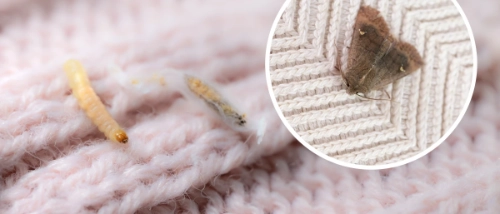
To repel moths from the house, the first step is to reduce clutter and keep areas well-organized. Regular cleaning and proper storage of clothing and linens, as well as checking rarely used fabrics  are key to preventing a full-blown infestation. In particular, pay attention to spaces like attics, closets, and storage boxes, where moths are more likely to hide. For long-term protection or for help with an active moth infestation, contact us for moth pest control.

Moth holes in clothes

Noticing moth holes in clothes is often one of the first signs that moth larvae are active. These holes are usually irregular and found in natural fabrics like wool, silk, or cotton.

If you discover moth holes in your clothing, remove the affected items and check for more signs of clothes moths in storage areas. Getting on top of the problem quickly can help prevent further damage.

Moths eat clothes only as larvae. The larvae feed on natural fibers like wool and silk because they contain keratin, a protein found in animal fur and skin. Keratin provides a rich source of food for the growing larvae.

To repel clothes moths, first focus on good housekeeping. Wash clothes before storing them, and use airtight containers or garment bags for storage. Vacuum storage areas regularly and keep closets well ventilated to make them less appealing to moths.

Natural scents are another way to deter moths from your home. Cedar wood or cedar oil is one of the more effective options, as its strong aroma naturally drives moths away—placing cedar blocks, hangers, or sachets in closets and drawers can help protect your clothes. And lavender, whether dried or in oil form, can also help as a moth deterrent.

Moth nests

Moth nests are nothing like bird nests. Instead, they’re clusters of moth eggs or silk cocoons, mostly hidden in dark, quiet places. You might find them in the corners of drawers, closets, or behind furniture. If you discover a moth nest, it’s best to check for other signs of moths nearby.

After spotting a moth nest, you may also find moth eggs on wall surfaces or small, crawling larvae. This usually means they’ve found a nearby food source, such as carpets, stored clothes, or furniture.

These early signs of a moth infestation can be easy to overlook. Use care when cleaning, as disturbing the area can cause the pests to spread.

 Carpet moths


Carpet moths can damage rugs, carpets, and other floor coverings. Their larvae feed on the natural fibers in these materials, leaving behind threadbare spots or bald patches. Look for telltale signs of carpet moths like shed skins, silk webbing, or tiny holes. Vacuuming regularly can help reduce the risk of a carpet moth infestation.

Professional moth control

Ehrlich technicians are trained to find where moths are hiding and apply targeted treatments that help reduce pest activity. We provide solutions designed to deal with all stages of the moth life cycle, from eggs and larvae to adult moths. 


Have you spotted moths?

Call Ehrlich today for advice and to schedule a moths inspection of your home or business or contact us now.

Frequently asked questions

Clothes moths prefer natural fibers like wool and silk cotton, whereas pantry moths, such as the Indian meal moth, are attracted to grains, dried fruits, and stored food items. If you store dry food, watch for signs of a pantry moth infestation: larvae in packaging or webbing around food containers.

Moths can be drawn in from outdoors through open doors or windows. They might also emerge from a hidden breeding site indoors, especially if conditions are warm and undisturbed.

It often means there's a moth infestation that hasn't been fully dealt with. Moths could be laying eggs nearby, or there may be hidden larvae continuing the life cycle.

Find your local branch

Discover the benefits of working with Ehrlich.