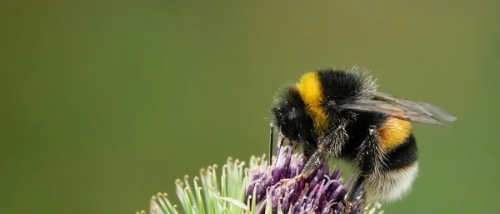
Habitat
Bumblebees typically nest close to the ground, often creating nests in abandoned rodent burrows, under piles of leaves, or in thick grass. They may also nest in compost heaps or under garden sheds.
In nature, their nests are found in environments rich in flowering plants, where they can easily collect nectar and pollen. Gardens, farmlands, and grassy fields are common nesting spots. While bumblebees prefer to avoid human interaction, their proximity to homes and gardens sometimes leads to issues when they nest in areas frequented by people.
Bumblebees in America
There are many species of bumblebees found in North America, each playing a crucial role in pollinating plants and flowers. Among the most common are the American bumblebee (Bombus pensylvanicus) and the common eastern bumblebee (Bombus impatiens). These bees thrive in areas where flowers are abundant, whether it's a backyard garden or a large agricultural field.
Bumblebees are vital for pollinating crops such as tomatoes, blueberries, and squash, making them invaluable to farmers and gardeners.
Bumblebees' behaviors, threats, or dangers
Bumblebees are relatively docile compared to other stinging insects. They only sting when they feel threatened or their nest is disturbed. Unlike honey bees, which can only sting once, bumblebees can sting multiple times, but they rarely do unless provoked.
The primary threat from bumblebees arises when their nests are built too close to homes, walkways, or other areas where humans frequently gather. While they don’t seek out conflicts, they defend their colony if they perceive a threat.
For those allergic to bee stings, even a single sting can trigger a severe reaction, making it essential to avoid disturbing any nests. If you notice a bumblebee nest in a high-traffic area, it's best to contact us today. Our professional Bee control experts can help you resolve the issue.
Are bumblebees hard to get rid of?
Bumblebees can be challenging to tackle without professional assistance. Their nests are often hidden in the ground or hard-to-reach places, making it difficult to locate and safely resolve the issue. Additionally, disturbing a bumblebee nest without the right equipment or knowledge can lead to aggressive behavior and multiple stings.