© 2026 Rentokil Initial plc and subject to the conditions in the legal statement.
Ehrlich Answers
"Yesterday, I found some huge ants with wings in my kitchen - are they dangerous or just regular ants?"
There is a good chance that what you have seen are carpenter ants, specifically reproductive ones called a swarmer. These ‘giant’ ants with wings are not a new species; they are simply a vital part of a colony’s natural cycle. Winged ants leave the nest to mate and start new colonies.
Many people mistake them for termites, as both can appear around the same time of year. The difference is that carpenter ants are larger, often jet black, and their wings are not equal in size. Termites have wings of the same length and a thicker waist.
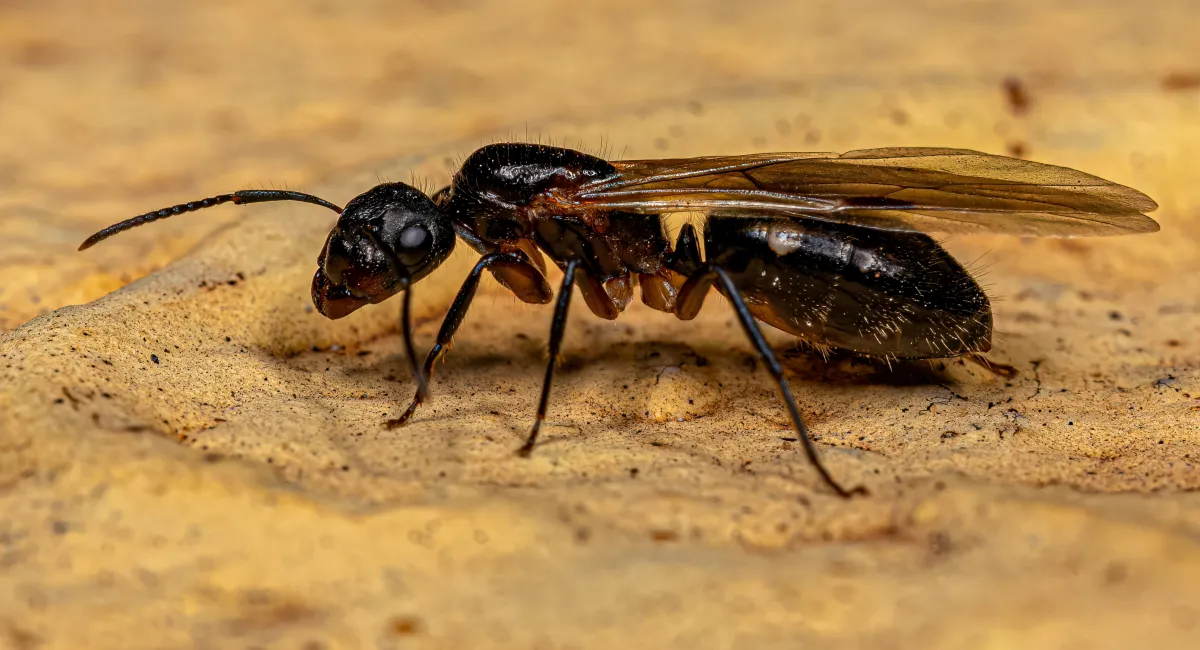
Although black ants with wings don’t actually eat wood the way termites do, carpenter ants tunnel through damp or rotting wood to build their nests.
Do black ants with wings bite?
Flying ants of many species, including carpenter ants and pavement ants, are capable of biting, but they rarely cause more than mild discomfort. These bites are not venomous and generally feel like a small pinch. While most flying ants aren’t dangerous to people, the presence of big black winged ants indoors could well signal a larger colony nearby, which can create problems ranging from structural damage to food contamination.
Ehrlich’s ant control technicians can help identify whether you’re dealing with carpenter ants or another pest and provide tailored treatments to help protect your home.
Schedule your free pest inspection today
Get peace of mind knowing your home or business is protected. Our technicians will assess your property and recommend customized solutions.
Seeing signs of ants?
Speak with your local pest control expert for fast advice and a free inspection.
Book a free inspection