Temps and termites are on the rise. Schedule your free inspection today.

800-837-5520 Call us for a free quote Contact us

Tick identification guide

Nice weather feels great and encourages you to get outside, but relaxing in your yard or taking a hike could also bring you into contact with ticks. Although ticks are small, they have the potential to transmit diseases and therefore should be taken very seriously. This tick identification guide will help you identify the type of tick you’ve found and understand how to spot ticks on people and pets.

Have you spotted ticks at your premises? Ehrlich can help you eliminate them. Our professional tick control technicians can help prevent the problem from spreading.

What does a tick look like?

What does a tick look like?

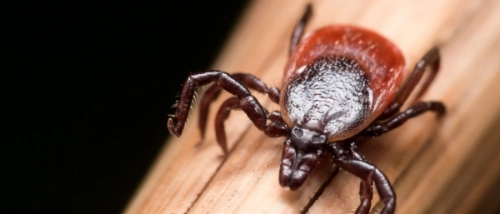
A tick will look a little different depending on the type you encounter and whether it is engorged from feeding. Remember, ticks are not insects; they are arachnids. In general, arachnids lack antennae and have four pairs of legs when they are adults.

Ticks can be either hard or soft. Hard ticks have mouthparts that are apparent from above and have a scutum (plate) on the back of their body. On female hard ticks, the scutum only partially covers the female’s back. Soft ticks do not have a scutum.

For help with identifying different ticks, see our separate page on tick species.

Are there any characteristics that are unique to ticks?

Ticks possess several unique traits that distinguish them from other pests. Their flat, oval-shaped bodies expand significantly after feeding, and they attach to hosts for long periods to feed on their blood. Ticks don’t jump or fly; they crawl and wait in tall grass or shrubs until a person or animal brushes by. Because they can transmit illnesses during this time, it’s essential to remove them as soon as possible.

Struggling with ticks?

Call now to book your free inspection.

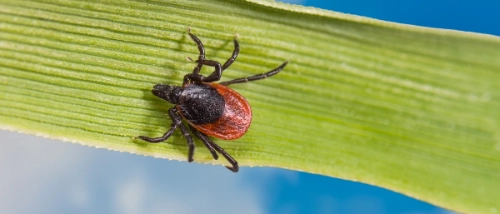
Close-up of a deer tick crawling on a piece of straw

Deer tick identification

You should definitely know what a deer tick looks like, because this kind of tick can transmit Lyme disease, along with babesiosis and anaplasmosis. Unengorged female ticks of this species are around 1/8 inch in length, but males are roughly 1/16 inch. They are orangish brown in color and oval in shape. Adults are roughly the size of a sesame seed.

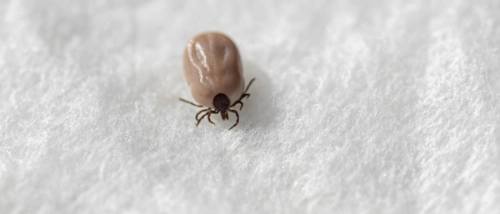
 An engorged tick crawling on a white surface

What does an engorged tick look like?

Ticks that are engorged have fed on blood. They will be larger than ticks that have not fed and can actually look quite different. If a tick is heavily engorged, that means it has been attached to a host for a longer period of time. If the tick is engorged only a little, that means it has been attached for a shorter length of time. 

Adult female ticks are commonly found attached to a host and feed for 7 to 10 days.

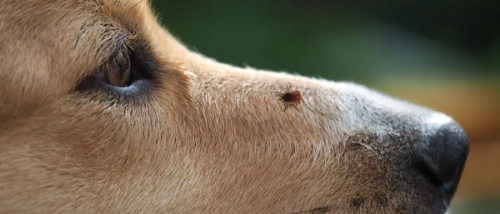
A tick on dog’s nose

What ticks look like on dogs

As your dog is a cherished member of the family, it probably pains you to think about your dog being bitten by a tick, but these pests can indeed feed on dogs. It is important to talk with a veterinarian about tick treatment for your dog if it gets ticks.

The American dog tick is one tick that feeds on the blood of domestic canines. When unengorged, adult female ticks of this species are around 3/16 inch in length (but can be up to around 5/8 inch when engorged), and males are about 1/8 inch. American dog ticks are brown in color and have whitish or grayish marks.

Meanwhile, the brown dog tick can also feed on dogs. It is red-brown in color and does not often feed on humans. Brown dog tick adults typically live between a dog's toes and in their ears. Your pooch could get ticks from places like vet offices, kennels, or homes that are infested.
Need help getting rid of ticks?

If you’ve seen small pests that appear to be ticks, you should contact a tick professional who can confirm their presence. Ehrlich technicians are trained to identify the type of tick and distinguish them from other pests. We can then recommend the proper treatment to get rid of ticks in and around your home. Contact Ehrlich today to schedule an inspection and safeguard your family from tick-borne risks.

Frequently asked questions

Ticks vary in size depending on the species and life stage. Most adult ticks are between 1/16 and 1/8 of an inch long when unfed, but can become several times larger after feeding.

No, ticks do not jump or fly. They wait on grass or shrubs and attach to a host when it brushes past them.

Proper tick identification helps determine the species involved and the diseases it might transmit. Understanding how to identify ticks enables pest control professional to select the most effective treatment for controlling ticks.

Find your local branch

Start living pest-free today with PestFree365+. Ehrlich Pest Control protects your home from 39 different pests for the ultimate peace of mind.