Temps and termites are on the rise. Schedule your free inspection today.

800-837-5520 Call us for a free quote Contact us

How to get rid of moles in your yard

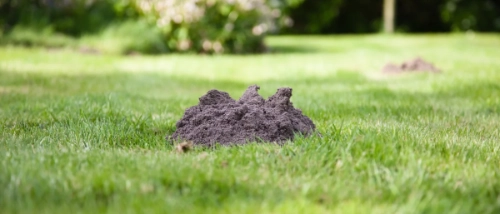
Moles usually move into your yard from an adjacent wooded area. It’s unlikely that you will ever see moles as they rarely venture above ground, but the irritating evidence of their existence on your property (mole holes) is hard to miss. People sometimes confuse moles with other small animals like voles or shrews, but each has distinct behaviors and signs. While moles create tunnels that damage lawns, voles and shrews may leave different types of marks or burrows. There are a few options when it comes to getting rid of moles, but the most effective way is to contact us for professional treatment.

How Ehrlich can help get rid of moles

Although moles do not transmit diseases to humans or pets, professional mole removal is recommended if you've seen moles present in your yard. Mole populations can grow fast and a small mole problem can quickly get out of control. Below, we take a look at the most common methods of getting rid of moles

Mole trap

Bait

Baiting is one of the most efficient ways to get rid of moles in your yard. Here at Ehrlich, we utilize a multi-step baiting service to provide you with effective mole removal.

At your first service for moles, your specialist will create holes in the tops of the mole tunnels and will mark them with a landscaping flag. After a few days, they will return to see if any of the holes they created are closed. Any holes that have been closed represent an active tunnel, so bait will be placed in the tunnel to control the mole problem. Any holes that have not been closed represent an inactive tunnel, so your technician will step on the entire tunnel to make it level with the ground.

These steps will be repeated until new tunnels stop appearing and the holes are no longer being closed by the mole(s). This process usually takes anywhere from three to six weeks depending on the level of activity.

Mole trap

Trap

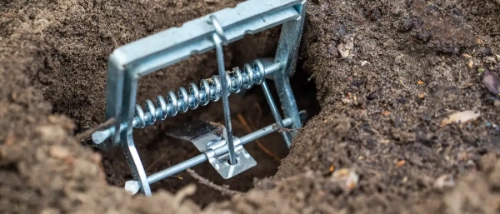
Though there are a few different types of mole traps on the market, we do not usually recommend using traps as the primary method for mole removal.

The first type of trap that can be used is a plunger-style trap, which is triggered when a mole pushes up on a depressed tunnel. The second type of trap is a scissor-style trap that is placed within an active mole tunnel and is triggered as the mole passes through the trap.

In most states, both of these types of traps do need to be checked every day, and since they are not species-specific, they can harm other wildlife.

Repellents

There are many repellents that professional pest control companies can use. They range from ultrasonic devices to liquids to granular treatments. However, when treating moles, baiting and trapping are usually more successful in solving the problem than a repellent.
Struggling with moles?

Call now to book your free inspection.

Natural mole repellents

There are a few natural remedies that you can use to repel moles from your yard. These natural repellents will make your yard less appealing to moles and will help create a barrier so they won’t waste any time hanging around your property.

Plants that repel moles

Planting specific types of flowers and plants throughout your landscaping will help create a natural barrier for moles. Moles do not like plants that have strong smells, such as marigolds, daffodils, or anything from the allium family, so choosing to plant these in your garden or mulch beds will help to keep the moles out.

Eliminate food sources

Food is a mole’s largest motivator so controlling their food source on your property is one of the most effective ways to get rid of them. You can reduce one of the main food sources of moles, earthworms, by removing any moss or weeds from your yard. Also, cutting your grass and performing regular garden maintenance will make your yard less attractive to moles and other pests like mice.

DIY mole repellents

There are plenty of old DIY methods that people try to use to get rid of moles in their yards and gardens, but most of these have no scientific support. The methods below will not remove the moles for good, if at all.

Flooding

Moles do not like to live in unfriendly environments so flooding their tunnels with water from a garden hose will certainly make your property a less appealing place to live. The thought behind this DIY mole repellent is that it will force the moles to find another yard to live in. Flooding mole tunnels will not kill them, but it may irritate them enough to relocate. This is a method that would have to be done on an ongoing basis and it will not fully eliminate your mole problem.

Castor oil and dish soap

You can create your own mole repellent with castor oil and dish soap. Pouring this mixture down the mole tunnels in your yard will not kill the moles, but it will make them sick. The castor oil and dish soap will cause digestive issues for the mole, and therefore will make living in your yard undesirable to them. This isn’t a foolproof method, though, especially if you live in an urban area. Some moles may just put up with the side effects because they don’t have anywhere else to go.

Juicy Fruit gum

Placing wrapped Juicy Fruit gum on top of a molehill is a common DIY mole repellent myth. The thought is that the mole will be attracted to the scent of the gum and therefore would eat the gum and its wrapper. The mole would then die because it wouldn’t be able to digest the wrapper. However, moles are carnivores and are not interested in eating anything besides insects and grubs. Aside from being attracted to the Juicy Fruit scent, this method probably won’t work because there’s really no reason a mole would actually eat the gum.

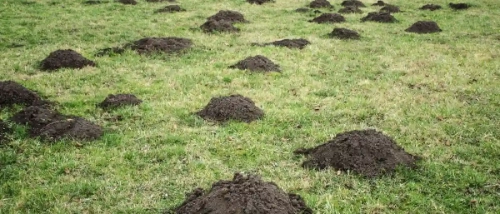
Mole damage on a lawn

Contact Ehrlich for professional mole removal

If you need to get rid of the moles on your property, Ehrlich has the expertise to help. Ehrlich offers effective mole baiting and trapping solutions that are both successful and humane. Our technicians understand the habits of moles, enabling highly targeted treatments. 

If you would like professional help with your mole problem, talk to one of our helpful experts by calling 800-837-5520 or contact us online.


Schedule an inspection today

Frequently asked questions

One of the most common signs of moles in yard areas is the presence of raised, winding tunnels just below the surface. These are known as surface runways and are created as moles tunnel searching for food. You are also likely to notice small volcano-shaped mounds of soil—these are molehills created as they push dirt to the surface. Unlike voles or gophers, moles don’t leave open holes and rarely come above ground.

Yes, certain plants and landscaping strategies may help repel moles naturally. Moles dislike the strong scent of plants like marigolds, daffodils, and alliums, which can act as natural deterrents. Creating physical barriers using underground mesh or gravel can also discourage tunneling. If you're looking for ways to remove moles naturally, try using deterrent plants. Also, maintain your yard by reducing excess moisture. This will help make your lawn less attractive to moles.

Moles may move on if food sources become scarce, but there's no guarantee they'll leave permanently. In fact, as long as your yard offers plenty of insects, grubs, and worms, moles are likely to stay. Waiting for them to leave without taking action can lead to ongoing damage. For lasting results, proactive steps toward getting rid of moles are usually necessary to remove them effectively.

Yes, moles can cause significant damage to your yard and garden. While they don't eat plants, their tunneling can displace roots, dry out soil, and create an unsightly, uneven surface. Their presence can also indirectly harm garden plants and landscaping features. To avoid long-term damage, tackle the issue early. Use baiting or trapping to get rid of moles in the yard before their tunnels spread too far.

Find your local branch

Start living pest-free today with PestFree365+. Ehrlich Pest Control protects your home from 39 different pests for the ultimate peace of mind.