Temps and termites are on the rise. Schedule your free inspection today.

800-837-5520 Call us for a free quote Contact us

Housefly exterminators and removal services

Houseflies (Musca domestica) are one of the most commonly encountered pests indoors in the United States. Belonging to the Muscidae family of flies, houseflies are of particular concern to humans as they have been found to harbor more than 100 pathogenic organisms. While they may seem harmless, fly infestations can pose serious health risks as they can carry bacteria and contaminate surfaces, especially in food-handling areas.

Houseflies regurgitate saliva onto solid foods to effectively liquefy the material, and then they use their sponging mouth parts to ingest their meal. When a fly lands or rests on a surface, it defecates and regurgitates on it. It’s this feature, along with their many body hairs, which trap and carry bacteria that make them well adapted for mechanically transmitting disease. Some diseases that houseflies are suspected of spreading to humans include salmonellosis, dysentery, cholera, diarrhea, typhoid fever, and many more.

Similar in appearance to other types of flies, like flesh flies and cluster flies, houseflies can be identified by the four narrow black stripes found on the thorax (part between the neck and abdomen).
Is your property infested with houseflies? Ehrlich’s local pest experts are trained to identify the source of a fly problem and deliver targeted services for housefly removal.

Speak to an Ehrlich expert at 800-837-5520 or contact us online to set up a free inspection with a technician an expert fly exterminator.

Housefly treatments

Our technicians will assess your property and recommend a combination of treatments designed to reduce fly populations and limit breeding environments. Depending on your environment, multiple methods may be used to create the most effective result.

Every fly infestation is different. Your technician will inspect the area and build a treatment plan based on the level of activity, layout, and contributing factors such as waste storage or structural access points.

Discreet commercial light traps attract and capture adult flies in sensitive areas like kitchens or food prep zones. These traps are especially useful in commercial facilities where hygiene is a top priority.

Technicians will assess and address common fly entry points. This may include sealing gaps, repairing window screens, and installing air curtains to keep flies from entering buildings in the first place.

In approved areas, residual insecticides may be applied to walls, surfaces, or fly resting sites to help control populations. These treatments are carefully selected based on effectiveness and your specific needs.

Bait stations and traps are useful for attracting and eliminating house flies around high-risk areas like dumpsters, loading docks, or food disposal zones. These tools strive to reduce adult fly numbers while monitoring ongoing activity.

Effective fly control starts with cleanliness. Your technician will point out sanitation issues that may be contributing to the problem, such as overflowing trash cans, greasy surfaces, or food debris, and provide recommendations for better waste handling.

There are a number of preventative methods you can take to get rid of house flies – especially in your home.

  • Clean up discarded food - house flies are attracted to human food. Be sure to clean up around your home or commercial space and throw away discarded food into covered trash cans lined with plastic bags. 
  • Clean up after pets - animal feces is a known attractant of house flies. Be sure to clean up after pets in the area surrounding your property. Also, house flies are attracted to pet food so remember to make sure no leftover pet food is left out for long periods of time. 
  • Keep garbage covered - it is important to keep your garbage bins fully covered as odors and decaying food will attract house flies.

Installing or repairing window and door screens, sealing utility gaps, and fixing broken vents can help prevent flies from entering your space. These structural improvements are a key part of long-term fly prevention.

To track fly activity and prevent future issues, technicians may install monitoring traps and schedule regular inspections. This allows us to respond early to new activity and adjust your treatment plan as needed.


While these preventative methods can help reduce the conditions that attract houseflies, they may not be enough once an infestation has taken hold. In those cases, residential pest control is the most effective way to identify breeding sites, apply targeted control, and help prevent flies from returning.

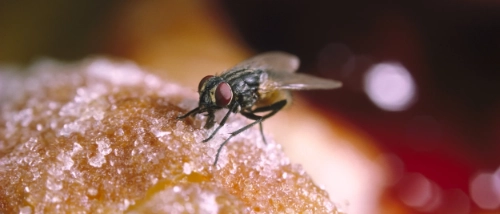
House fly feeding on a sugary dessert

Our ERDM approach to housefly control

A female housefly can lay as many as 900 eggs in their lifetime, so it’s crucial to act fast. At Ehrlich, we use the ERDM strategy to develop a pest elimination plan tailored to your specific environment. EDRM stands for: 

  • Exclusion
  • Restriction
  • Destruction
  • Monitoring

This integrated approach looks at how these flies are entering, what’s attracting them, how to reduce their numbers, and how to prevent future activity. Whether you're dealing with flies in a residential setting or a commercial facility, our ERDM fly control process is designed to provide effective, long-term solutions.

Seeing flies?

Call now to book your free inspection.

What are the signs of a housefly infestation?

Houseflies are easy to spot, but an infestation may go unnoticed until populations grow. Signs of a fly infestation include:

  • Flies consistently gathering near windows, doors, or trash bins
  • Small, dark specks (fly droppings) on walls or surfaces
  • Buzzing sounds around lights or vents
  • Maggots (fly larvae) in garbage, drains, or decaying matter
     

 Common housefly breeding and resting areas

Houseflies lay eggs in moist, decaying organic matter. Common breeding sites include trash cans, floor drains, compost containers, dirty mop buckets, and even wet rags. Resting flies may also be found on walls, ceilings, and light fixtures. Identifying and cleaning these areas is key to stopping the fly life cycle.

What attracts houseflies to your home or business?

Houseflies are attracted to food waste, rotting material, sugary liquids, and animal waste. Open trash containers, unsealed food, and even dirty recycling bins can invite flies indoors. Cracks around windows, doors, and utility lines give them easy access to your building. Keeping food stored properly and maintaining good sanitation are essential steps in deterring fly activity.

Get rid of houseflies with Ehrlich

If you’ve seen a sudden increase in flies around your home or business, you need a reliable pest control company. Whether it’s sealing up entry points, treating breeding areas, or installing fly traps, Ehrlich’s housefly control is designed to be effective and prevent future infestations. If you have any questions call  800-837-5520 or contact us by clicking the button below. Get your FREE quote today.

Frequently asked questions

No. Houseflies do not have biting mouthparts like some other insects. Instead, they feed by sponging up liquids using a specialized mouth structure.

A typical housefly lives for about 15 to 30 days, depending on conditions such as temperature, food availability, and shelter. During that short lifespan, a single female can lay hundreds of eggs, which is why fly populations can grow quickly if not addressed early.

Houseflies commonly come from areas where organic material is breaking down. They often breed in garbage cans, compost piles, animal waste, and drains. Once mature, adult houseflies are attracted to food, moisture, and light, making homes and businesses easy targets.

Houseflies feed on a wide range of organic matter, including human food, sugary substances, rotting produce, meat scraps, and animal waste. They are especially drawn to strong odors, decaying material, and any moist surface where they can dissolve food before consuming it.

If you’re seeing a large number of houseflies, there’s likely a breeding source nearby. Common causes include uncovered trash, pet waste, food spills, or clogged drains. Even a small amount of organic buildup in hidden places can support fly reproduction. Poorly sealed entry points can also allow flies from outdoors to enter more easily.

Houseflies typically enter through open doors, windows, vents, or cracks around utility lines. Damaged or missing screens and gaps around entryways make it easy for these pests to find their way indoors, especially if food or waste odors are attracting them from outside.

Find your local branch

There are a few things you can do to keep flies away.