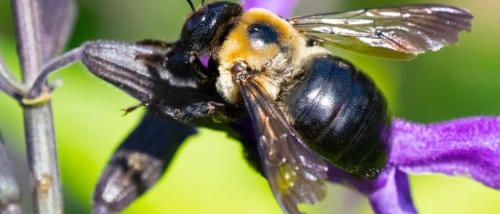
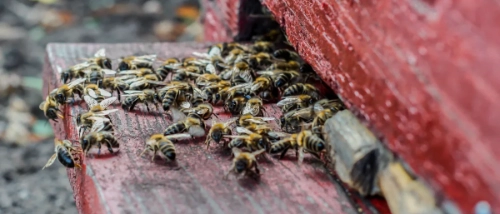
Carpenter bee damage vs. termite damage
While both carpenter bees and termites can damage wood, termites eat the wood, whereas carpenter bees excavate it to create nests. The tunnels made by carpenter bees are neat, round, and follow the wood grain. Termite damage usually appears rough and hollowed out. If you spot smooth, round holes along with frass, you’re likely dealing with carpenter bee pest control needs rather than termites.
Sounds carpenter bees make in wood
As females tunnel into wood, you may hear soft buzzing or tapping, especially in quiet places like sheds or attics during spring. This sound comes from the females chewing through wood to excavate nesting chambers. If you hear this, it may be a sign of an active carpenter bee infestation and should be assessed by a pest control company.
Habitat
Carpenter bees prefer untreated or weathered wood. Common nesting sites include fascia boards, eaves, window trim, deck posts, rails, and wooden outdoor furniture. Over time, these bee nests can expand and cause structural damage to your property.
Carpenter bees in America
Carpenter bees are found throughout the United States, especially in warm, temperate regions. They're most active in spring and early summer as they burrow into wood to build nests. In some areas, woodpeckers may also damage structures while searching for carpenter bee larvae.
Carpenter bees' behaviors, threats, and dangers
Carpenter bees are solitary and non-aggressive. While males may act territorial by hovering near humans, they pose no real threat. The primary concern is the damage from repeated tunneling, which can weaken structures and attract other pests like ants or spiders. Left untreated, the damage from carpenter bees may result in expensive repairs.
Are carpenter bees hard to get rid of?
Carpenter bees can be challenging to get rid of because they tend to return to the same nesting sites year after year. Simply filling the holes often doesn’t solve the problem, as bees can burrow again or move to a nearby area.
You can take preventive measures to deter carpenter bee activity at your home by:
- Ongoing maintenance, including painting or varnishing exposed wood surfaces.
- Removing weathered or decayed wood exposed on the exterior of the building.
- Using pressure-treated wood in exterior areas of the structure consistently exposed to possible moisture.
- Capping exposed wood with vinyl or aluminum.
Some homeowners may try DIY solutions, but professional exterminators are usually necessary to help to solve the problem around your property.