Habitat
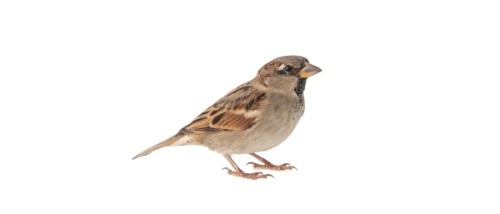
The European house sparrow is highly adaptable when it comes to habitat. They are found in urban and suburban areas, parks, farms, and near any human habitation. They tend to avoid dense forests or extremely remote areas but are incredibly flexible when it comes to nesting. Their nests can be found under eaves, in birdhouses, and in cracks in buildings. They tend to favor these areas as nesting sites because they are close to sources of food and provide shelter from predators.
House sparrows are often spotted near shopping malls, outdoor dining areas, or any place with available food sources. Their close association with humans has enabled them to spread quickly throughout North America and thrive in cities and towns where other bird species may struggle to find resources.
Behaviors, threats, and dangers
European house sparrows are known for their competitive and aggressive behavior, particularly toward native birds. These sparrows often take over nesting sites used by native species like bluebirds, swallows, and purple martins. In doing so, they not only reduce the nesting options available for these birds but also drive them out of their habitats through direct aggression.
House sparrows are known to invade the nests of other birds, sometimes destroying eggs or killing nestlings to claim the site for themselves. This behavior has had a considerable negative impact on native bird populations, especially since house sparrows reproduce quickly and in large numbers. They are highly territorial, which makes it difficult for smaller and less aggressive bird species to compete for food and shelter.
In addition to posing a threat to native birds, house sparrows can also be a nuisance for humans. They often nest in inconvenient locations, clogging vents, gutters, or pipes, and creating noise and debris that can become problematic for homeowners and businesses alike.
Are sparrows invasive?
Yes, the European house sparrow is classified as an invasive species in North America. They were first introduced to the continent in the mid-1800s, primarily in an attempt to control insect populations. However, their adaptability and rapid reproduction rates allowed them to spread across North America, where they have since established themselves as a dominant species, often outcompeting native birds.
House Sparrows are now found throughout the U.S., Canada, and parts of Mexico, where their presence has led to a decline in native bird populations. The aggressive behaviors of house sparrows, combined with their high reproductive rate, make them a significant ecological threat to native birds that rely on similar food sources and nesting sites.
If you are in need of European house sparrow control, contact us at Ehrlich for expert bird control help. We can assess the problem and advise on the most effective and humane measures to get rid of house sparrows. We also help homeowners and businesses with other species, like pigeons, crows and ravens, and Canada geese.