© 2026 Rentokil Initial plc and subject to the conditions in the legal statement.
Updated on: 30 April 2026
If you run a restaurant, hotel, or retail business, you already know that flies aren't just annoying: they're bad for business.
A single fly buzzing around your dining room or hovering near your entrance can send customers straight out the door. And the damage doesn't stop there. Flies spread germs, contaminate surfaces, and can lead to failed health inspections and fines, or even temporary closures.
After more than 100 years protecting businesses across the East Coast, we've seen firsthand how quickly a minor fly problem can spiral into a major issue affecting your bottom line.
The good news? With the right solutions, flies can be prevented.
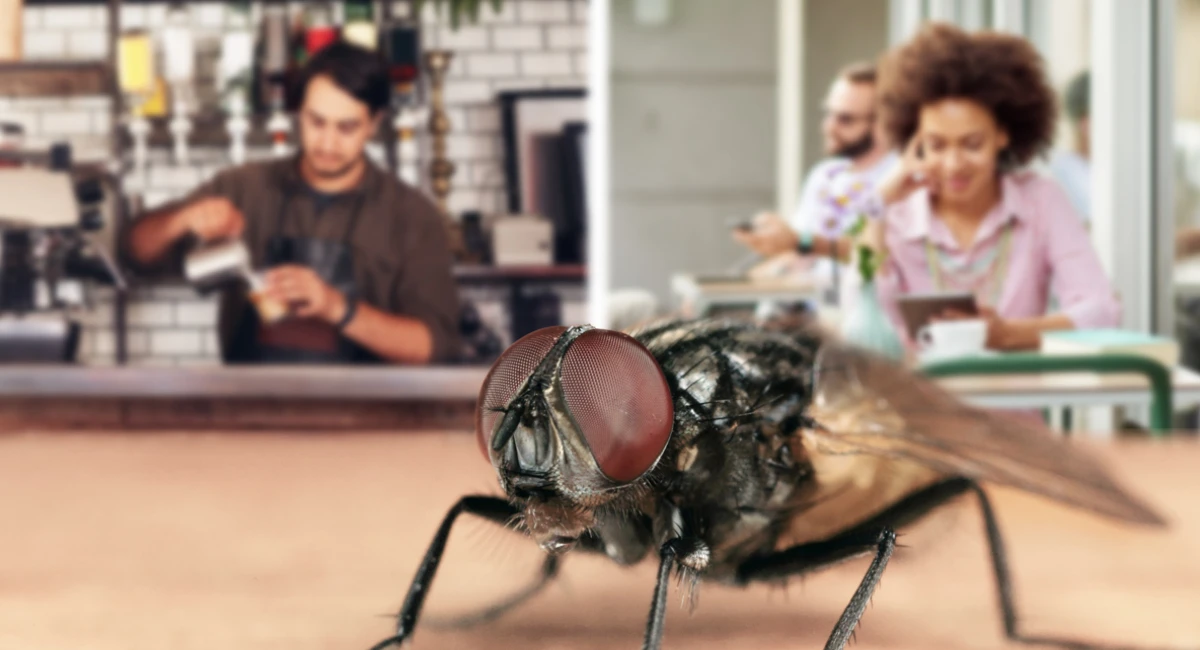
The real cost of flies in commercial spaces
Most business owners don't realize the full impact of a fly infestation until it's too late.
Beyond the obvious customer complaints and negative reviews, flies can contaminate food products, leading to costly waste. Health code violations can shut down operations and damage your reputation, taking months or even years to repair.
For businesses in food service and hospitality, flies represent a constant challenge. They travel long distances, breed rapidly in warm weather, and are drawn to the very things that make your business run— outdoor dining areas, loading docks, and food prep zones.
Fly control is particularly tricky because in order to eliminate the pest, the developmental site must be located, as breeding will continue to occur rapidly otherwise. To make things more problematic, the site might be far from where you are experiencing the annoyance. Understanding how to keep flies away is essential – when your reputation and revenue are on the line, working with experienced technicians who know exactly what to look for makes all the difference.
Fly attractants
- Food and waste - Outdoor dining areas leave food residue, spills, and crumbs.
- Heat – Flies breed more rapidly in warm environments. Heat escaping from kitchens and vents draws flies toward buildings.
- Light – Exterior lighting at night attracts certain fly species, drawing them toward building entry points. Though this can actually be used to aid in fly control. Insect light traps use UV bulbs that trap flies.
- Garbage/dumpsters – Dumpsters and waste bins provide decaying food, which flies use as both a food source and breeding ground.
- Dirty drains – With food and bacteria constantly flowing into drains, the build-up is inevitable. Regularly clean your drain to reduce the chances of a fly infestation. If you are having trouble with flies in your drains, we recommend Bioremediation.
- Strong odors - Flies have highly sensitive olfactory receptors and can detect food and waste odors from significant distances.
- Foot traffic and open doors - Frequent opening of doors creates air currents that carry interior food smells outward.
- Animal carcasses – Regularly check your outside areas for dead animals so you can stay ahead of potential fly problems.
- Bird droppings – Some flies breed in animal feces, particularly that of birds. Try to wash away any collections of bird droppings before they begin to attract flies.
The flies you’re likely dealing with
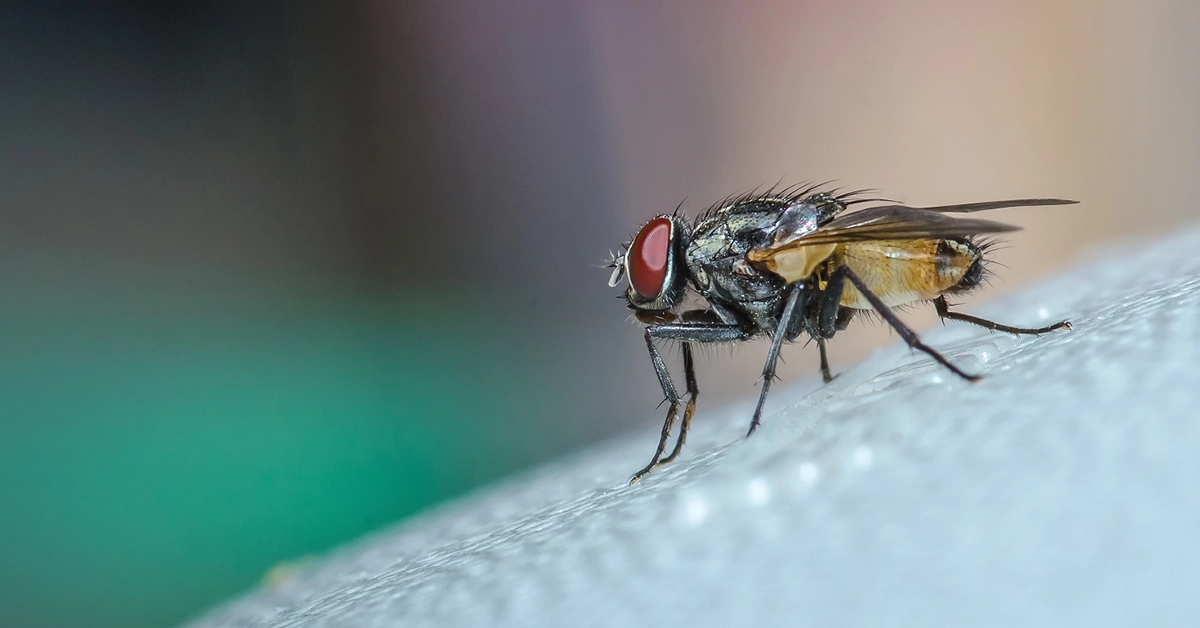
For hotels, restaurants, and bars, the most common outdoor offenders are house flies, flesh flies, and bottle flies.
House flies are drawn to waste bins, loading docks, and outdoor dining areas; bottle flies are attracted to exposed waste, outdoor bins, and any organic matter left in service yards or delivery areas; and flesh flies breed in decaying material and animal waste, making them a persistent concern around outdoor refuse storage and food preparation zones common to any commercial service area.
Because each species is attracted to the everyday conditions of a busy hospitality or food processing environment, identifying the right culprit is the first step toward effective control, and the fastest route to protecting your reputation.
If you’re left wondering about other species, visit our fly species page.
Get ahead of fly problems: Why outdoor solutions are so important
The most effective fly management doesn't start indoors. Flies congregate around dumpsters, loading docks, outdoor dining areas, and building entry points long before they enter your premises. Targeting these hotspots with dedicated outdoor fly control creates a protective barrier that keeps indoor fly pressure consistently low.
Outdoor fly control that actually works
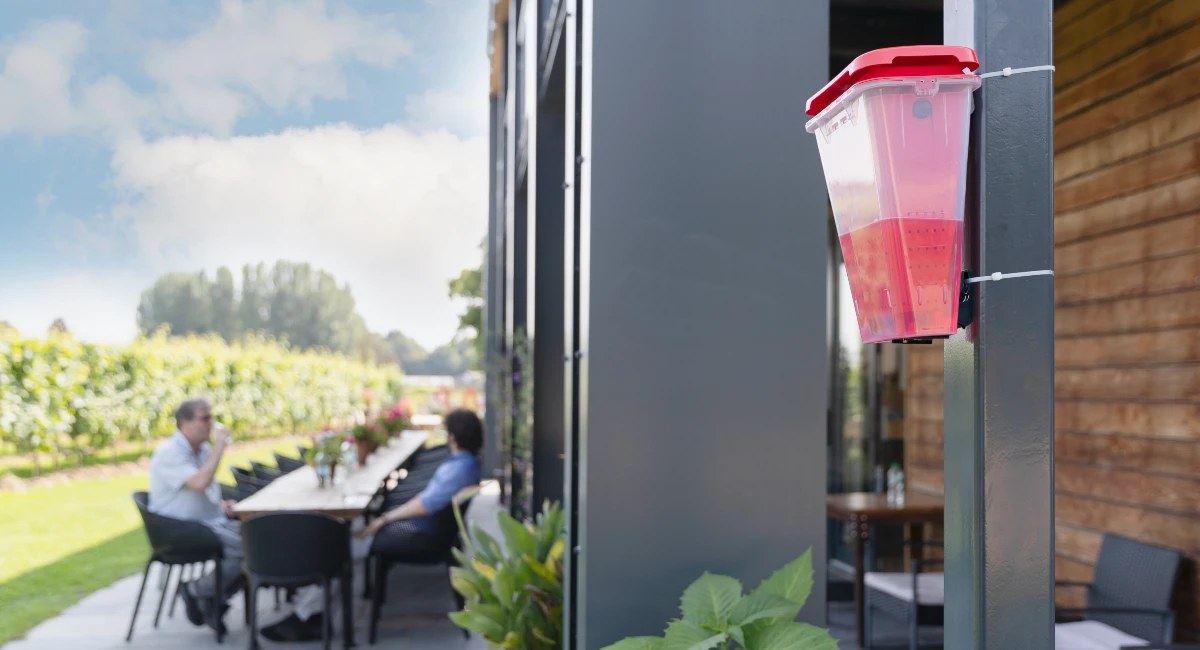
EcoCatch Flies is an outdoor trap designed specifically for commercial properties by expert entomologists. It’s a sustainable fly control solution which is ideal for restaurants with patios, hotels, retail locations, food processing facilities, and animal care operations.
In controlled testing, it captured 60% more flies than leading competitors¹, particularly around waste areas, loading zones, and outdoor dining spaces.
The trap uses a specialized funnel design and high-contrast coloring that's highly visible to flies, dramatically increasing catch rates. It's made from recycled plastic, requires no electricity, and is 100% recyclable. Unlike disposable traps, it's built to withstand extreme temperatures and lasts season after season.
Plus, the discreet design won't detract from your property's appearance, and captured flies stay locked inside, reducing contamination risk.
Environmentally conscious fly control
As more businesses commit to environmental responsibility, the pest control solutions you choose reflect your values. Here's what sets EcoCatch Flies apart: it doesn't generate plastic waste like disposable alternatives. Over 33% of each unit is made from recycled plastic, and the trap is designed to be reused almost indefinitely.
EcoCatch Flies gives you peace of mind. And at the end of its long life cycle, it's 100% recyclable.
We’re Green Pro Certified (through the NPMA), and EcoCatch Flies is a natural extension of that commitment. Our passion for delivering superior fly control while eliminating waste helps your business meet sustainability goals, reduce disposal costs, and appeal to environmentally conscious customers and stakeholders.
No electricity required, flexible installation
EcoCatch Flies doesn't require a power source, which means you can install it anywhere flies gather. Mount it on walls, fences, or poles. Hang it from trees or ceiling structures. Place it strategically near waste areas, outdoor dining spaces, or loading zones.
This flexibility allows you to target the specific areas where your business faces the greatest fly pressure.
Discreet design
The lockable design reduces the risk of biohazard contamination—captured flies stay securely inside the unit, hidden from view. Our technicians provide regular servicing to ensure optimal performance, and the durable construction means you're not constantly replacing units or dealing with maintenance headaches.
Protecting your reputation starts with prevention
We've been protecting commercial properties for over a century. If you're dealing with flies or want to prevent problems before they begin, ask us about EcoCatch Flies.
¹ Based on controlled testing over a 24-hour period comparing EcoCatch fly trap to competitor disposable liquid bait alternative
Stop flies before they get inside
Let our technicians show you how EcoCatch Flies can protect your business. We'll assess your property and design a fly control strategy that works
- 60% more effective than competitors
- Sustainable and built to last
- FREE consultation; no obligation