© 2026 Rentokil Initial plc and subject to the conditions in the legal statement.
If you've ever watched bees moving from flower to flower in your garden, you've witnessed them doing what they do best, foraging for food. Bees are tireless workers, and their diet plays a crucial role not only in their survival but also in the health of entire ecosystems.
The basics of a bee's diet
Bees rely on a few key food sources to fuel their daily activities and support the colony. These staples provide the energy and nutrients they need to thrive.
Nectar: the primary energy source
Nectar is the sweet liquid produced by flowering plants, and it's the main source of energy for bees. Rich in sugars, nectar fuels bees' flight and daily activities. When a bee lands on a flower, it uses its long, tube-shaped tongue, called a proboscis, to extract the nectar. This nectar is stored in a special stomach called the crop, where it begins to be processed.
Once back at the hive, bees transfer the nectar to other worker bees through a process called trophallaxis. The nectar is then deposited into honeycomb cells, where it's fanned by the bees' wings to evaporate excess water. Over time, this process transforms nectar into honey, which serves as a long-term food reserve for the colony.
Pollen: the protein powerhouse
While nectar provides energy, pollen supplies the protein, fats, vitamins, and minerals that bees need for growth and development. Pollen is especially important for feeding bee larvae, as it supports their rapid development into adult bees.
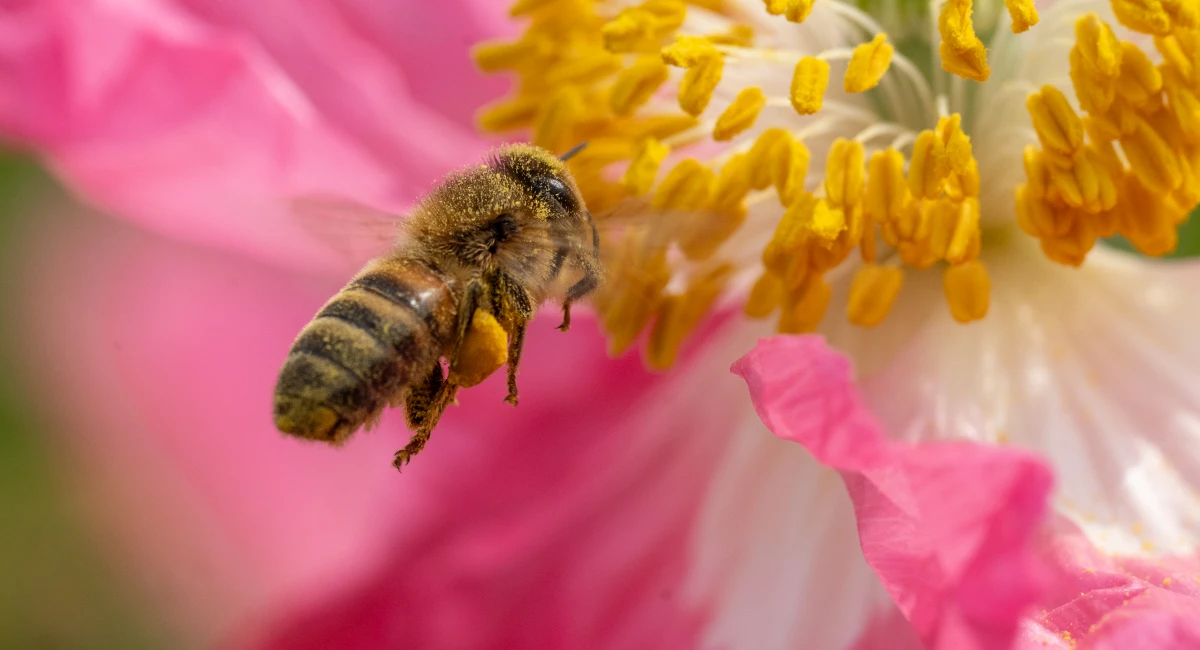
As bees move from flower to flower collecting nectar, pollen grains stick to their fuzzy bodies. Bees use their legs to brush the pollen into specialized structures on their hind legs called pollen baskets, or corbiculae. Once they return to the hive, the pollen is mixed with honey and saliva to create a substance called bee bread, which is stored in the comb and fed to developing larvae.
This process of moving pollen from flower to flower also makes bees vital pollinators, helping plants reproduce and supporting the growth of fruits, vegetables, and flowers.
What bees produce and consume in the hive
Bees don't just collect food; they also create specialized substances within the hive that serve different nutritional purposes for the colony.
Honey: stored energy for the colony
Yes, bees do eat honey. In fact, honey is one of the most important food sources for a bee colony, especially during the winter months or times when flowers are scarce. Honey provides a concentrated source of energy that can sustain the hive when foraging isn't possible.
Worker bees consume honey to fuel their activities, and it's also fed to larvae as they develop. The amount of honey a hive produces depends on the availability of nectar-rich flowers and the size of the colony.
Royal jelly: food for royalty
Royal jelly is a creamy, nutrient-rich secretion produced by young worker bees. It's fed to all bee larvae during their first few days of life, but only larvae destined to become queens continue to receive royal jelly throughout their development. This special diet triggers the physical and reproductive changes that allow a larva to develop into a queen bee rather than a worker bee.
Bee bread: fermented pollen
Bee bread is a mixture of pollen, honey, and bee saliva that undergoes fermentation inside the hive. This fermentation process breaks down the pollen's tough outer shell, making the nutrients more accessible and easier to digest. Bee bread is a critical protein source for young bees and helps support the overall health of the colony.
Seasonal and alternative food sources
While nectar and pollen are the mainstays of a bee's diet, bees are adaptable and will seek out alternative food sources when their preferred options aren't available.
Can bees survive without flowers?
During late fall, winter, or periods of drought, flowering plants may be in short supply. In these situations, bees may turn to other sources of sugar, such as:
- Ripe or overripe fruit that has fallen to the ground
- Tree sap or honeydew, a sugary substance excreted by aphids and other insects
- Sugary drinks or food left outdoors, such as soda, juice, or fruit
If you've ever had bees show up at an outdoor picnic, it's likely because they were attracted to the sweet scents and sugars in your food and drinks.
The importance of water
Bees also need water to survive. Water helps with digestion, regulates the temperature inside the hive, and is used to dilute honey when feeding larvae. Bees will visit birdbaths, puddles, pet water bowls, and other water sources to collect moisture and bring it back to the hive.
If you're noticing bees frequently visiting a water source on your property, it's a sign that a colony may be nearby.
What to do if bees are feeding near your home
Bees are beneficial insects and should be left undisturbed whenever possible. If a hive is located in a low-traffic area and isn't posing a threat, the best course of action is often to leave it alone. However, if the nest is in a high-traffic area, near a doorway, or poses a risk to anyone with allergies, professional bee control may be needed.
We understand the important role bees play in our environment. Our technicians can assess the situation and, when appropriate, work with local beekeepers to safely relocate colonies rather than eliminate them.
If you're dealing with more aggressive stinging insects like wasps or hornets, professional treatment may be necessary to protect your family and property.
Book your free pest inspection today
Our local technicians will assess your property and recommend tailored solutions. Fast, friendly, and completely obligation-free.
- Targeted treatments, applied safely
- Local experts, fast response
- Trusted, trained technicians