© 2026 Rentokil Initial plc and subject to the conditions in the legal statement.
Quick overview
- Centipedes are carnivores — they eat insects, spiders, and other small pests.
- House centipedes commonly prey on cockroaches, silverfish, and ants indoors.
- Seeing centipedes regularly often signals a bigger pest problem in your home.
- They're drawn to damp areas like basements, bathrooms, and crawl spaces.
- Reducing moisture and sealing entry points can help deter them.
If you've spotted a centipede darting across your bathroom floor or basement wall, your first question was probably: What is that thing, and what does it want? The answer is simpler than you might think. Centipedes eat other insects, and if they're in your home, it's because their food supply is too.
The basics of the centipede diet
Centipedes are strict carnivores. They don't eat plants, crumbs, or decaying matter. Every centipede, from the common house centipede to larger outdoor species, survives entirely on live prey. They are what scientists call "generalist predators," meaning they'll go after almost anything small enough to catch.
How centipedes catch their prey
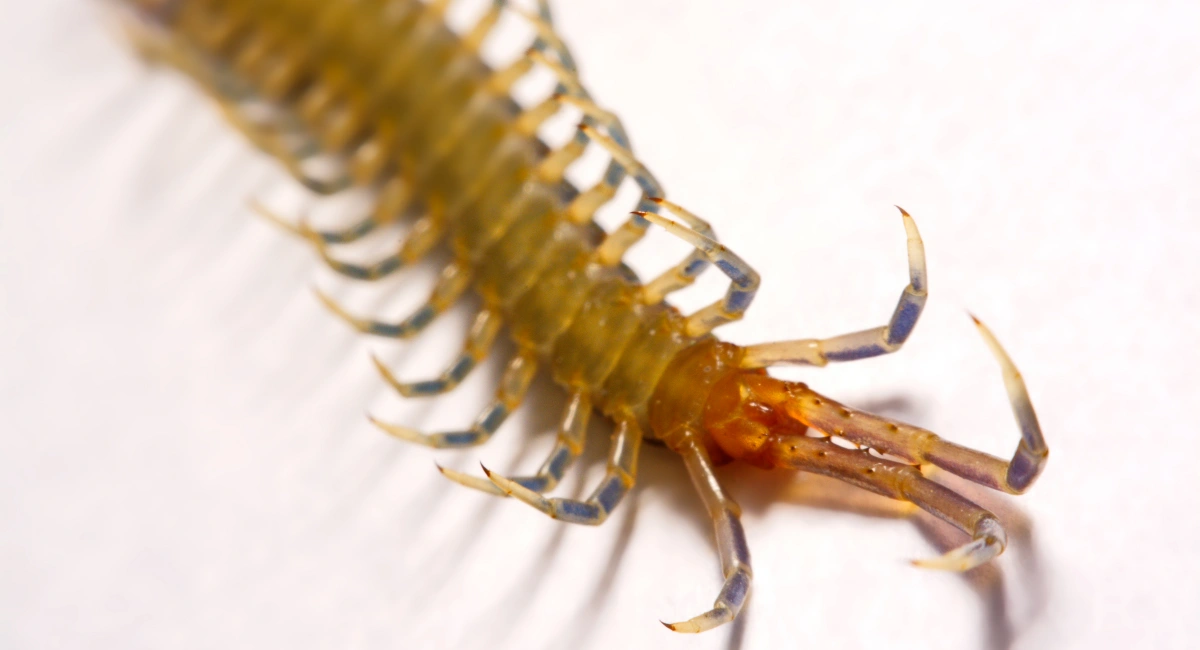
Centipedes use a pair of modified front legs called forcipules to grab and subdue prey. These claw-like appendages inject venom that immobilizes the target before the centipede feeds. Their long legs also give them impressive speed, allowing them to chase down fast-moving insects across floors, walls, and even ceilings.
Their long antennae pick up vibrations and chemical signals, helping them detect prey in complete darkness. It's a highly effective hunting system, and it makes centipedes surprisingly capable predators for their size.
What do centipedes eat indoors?
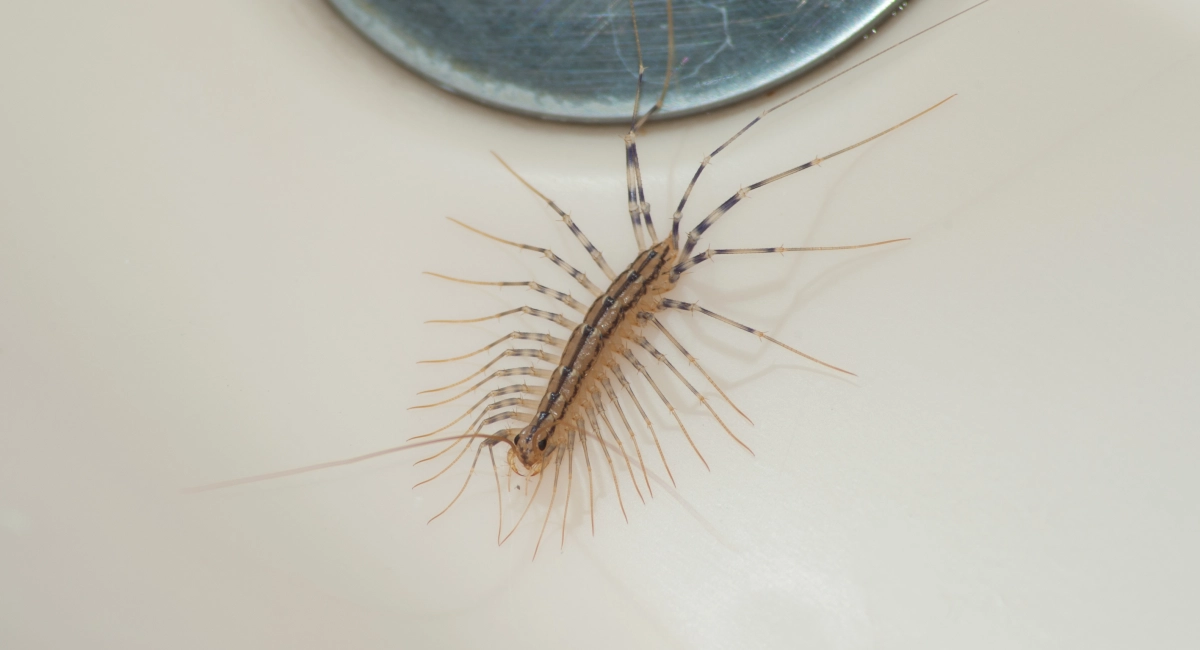
Indoors, centipedes feed on the insects and arthropods that share your home with them. The house centipede (Scutigera coleoptrata), the species you're most likely to encounter, is an active hunter that targets a wide range of common household pests. Despite its alarming appearance, it's one of the more useful uninvited guests you can have, because what it eats, you definitely don't want around.
Common prey for house centipedes includes:
- Silverfish and firebrats
- Cockroaches (including German roaches)
- Spiders
- Crickets
- Moths and carpet beetle larvae
- Ants, including carpenter ants
- Bed bugs (opportunistically)
If you're seeing centipedes regularly, it's worth checking whether you also have a cockroach infestation or a silverfish problem driving their presence
What do centipedes eat outdoors?
Outside the home, centipedes have a broader menu. Garden and stone centipede species found under rocks, in mulch, and in leaf litter tend to feed on:
- Earthworms and soil-dwelling larvae
- Slugs and small snails
- Springtails and mites
- Fly larvae
- Other small invertebrates
Larger species found in warmer, southern states can grow to six inches or more and may take on prey like small lizards or frogs. These are far less common in residential settings, but they do exist in parts of Texas and the Southwest.
What centipedes tell you about your home
Centipedes are also nocturnal. They hide during the day and come out at night to hunt, which is why you often catch them by surprise in low-traffic areas of your home.
It’s important to remember that centipedes follow their food supply. If you're seeing them frequently, it's a strong signal that other pests are present. Centipedes don't wander into homes randomly. They come in because there's something to eat.
The pests that attract centipedes most often include:
- Crickets in basements or crawl spaces
- Cockroaches in kitchens or utility rooms
- Spiders throughout the home
- Silverfish in bathrooms or storage areas
Moisture is the other major factor. Centipedes need humidity to survive, and they gravitate toward damp areas like basements, bathrooms, and crawl spaces. Leaky pipes, poor ventilation, and high humidity all create the kind of environment centipedes thrive in.
What to do if centipedes are in your home
A single centipede here and there isn't usually cause for concern. But if you're seeing them often, it's worth taking action, both to address the centipedes themselves and to find out what they're feeding on.
Steps you can take
- Reduce moisture: Fix leaky pipes, use a dehumidifier in damp areas, and improve ventilation in basements and crawl spaces.
- Seal entry points: Caulk cracks in foundations, seal gaps around pipes, and install door sweeps.
- Remove outdoor harborage: Clear leaf piles, wood stacks, and mulch beds away from your home's foundation.
- Address other pest issues: Treating the insects centipedes feed on is one of the most effective ways to reduce their numbers.
DIY steps can help in the short term, but they rarely get to the root of the problem. If centipedes are a recurring issue, it usually means there's an underlying pest population that needs professional attention.
Our technicians can inspect your home, identify what's attracting centipedes, and recommend a targeted treatment plan. Fill out our online form or give us a call today to schedule a free inspection.
See how Ehrlich can help to eliminate centipede infestations from your property.
Book your free pest inspection today
Our local technicians will assess your property and recommend tailored solutions. Fast, friendly, and completely obligation-free.
- Safe, targeted treatments
- Local experts, fast response
- Trusted, trained technicians