© 2026 Rentokil Initial plc and subject to the conditions in the legal statement.
Quick overview
- Cockroaches don't build structured nests, they cluster in dark, warm, hidden spots.
- Look for droppings, shed skins, egg casings, and a musty odor near suspected areas.
- German and American cockroaches are the two most common species found in US homes.
- Common hiding spots include behind appliances, under sinks, and inside wall voids.
- While DIY methods offer short-term relief, professional treatment tackles the nest at its source.
Spotting a single cockroach in your home is unsettling enough. But if you've seen one, there's a good chance a cockroach nest is somewhere nearby. Cockroaches are secretive by nature, and their nests are rarely out in the open. Knowing what to look for can help you catch a problem early, before it has a chance to grow.
What is a cockroach nest?
Unlike bees, wasps, or ants, cockroaches don't build structured nests. A cockroach nest in a house is simply a spot where roaches gather in large numbers, usually somewhere dark, warm, and close to food and water. They're not social insects with a queen or a colony hierarchy. They congregate because the conditions suit them, not out of any organized behavior.
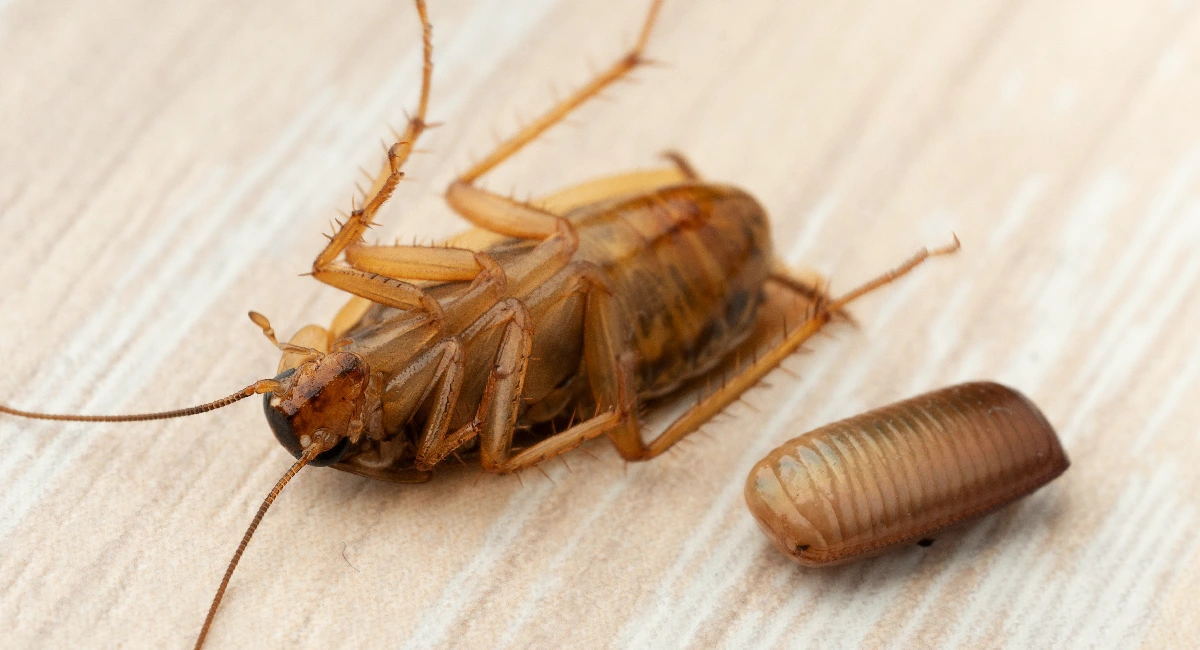
Inside a nest, you'll typically find a mix of live and dead roaches, shed skins, droppings, and egg casings. The more of these you see concentrated in one area, the more likely it is that you've found an active nesting site.
Signs of a cockroach nest
Knowing the signs of a cockroach nest is the first step toward dealing with one. Here's what to watch for:
Droppings
Cockroach droppings are one of the most reliable indicators. They look like coarse black pepper or coffee grounds and tend to accumulate in corners, along baseboards, inside cabinets, and behind appliances. The more droppings you find concentrated in one spot, the closer you are to the nest.
Egg casings (Oothecae)
Cockroaches lay their eggs inside protective cases called oothecae. These are small, oval, brownish capsules, usually less than a quarter of an inch long, and a single case can contain up to 40 eggs. Finding one or more of these near a suspected hiding spot is a strong sign of an active or recent infestation.
Shed skins
As cockroaches grow from nymphs into adults, they shed their outer shells multiple times. These discarded skins collect near nesting areas and are a clear sign that roaches have been living and developing in that spot.
Dead roaches
Finding several dead roaches in the same area, especially alongside droppings and shed skins, points to a nearby nest. A single dead roach in isolation is less telling, but a cluster is worth investigating.
A musty odor
Cockroach nests produce a distinctive musty, oily smell. It comes from a combination of droppings, pheromones, and decaying material. If you notice an unexplained odor near your kitchen appliances, under a sink, or in a basement, it's worth checking those areas carefully.
Where do cockroaches nest?
Where cockroaches nest depends on the species, but they all share the same basic requirements: warmth, darkness, moisture, and easy access to food. The two most common species in the US are the German cockroach (Blattella germanica) and the American cockroach (Periplaneta americana).
German cockroaches are smaller and tend to stay close to kitchens and bathrooms. American cockroaches are larger and more likely to be found in basements, crawl spaces, and drains.
Common nesting locations include:
- Behind and under refrigerators
- Inside kitchen cabinets and drawers
- Under sinks
- Behind dishwashers and stoves
- In crawl spaces and basements
- Inside wall voids
- In cluttered storage areas.
How to find a cockroach nest
Finding a cockroach nest takes patience and a flashlight. Start in the kitchen, since that's where most infestations begin. Pull out appliances, check inside cabinets, and look behind the stove and refrigerator. Move on to bathrooms, checking under the sink and around any plumbing. Roaches are nocturnal, so if you turn on a light at night and see them scatter, you're likely close to their hiding spot.
Bear in mind that cockroaches can squeeze through surprisingly small gaps. They can access wall voids, the inside of appliances, and spaces behind loose tiles or wallpaper. This is part of what makes them so difficult to track down without professional help.
What to do if you find a cockroach nest
If you've found signs of a nest, start by cleaning up food debris, fixing any leaky pipes, and sealing gaps around baseboards and plumbing. Clearing out clutter, especially old cardboard boxes, removes the hiding spots roaches rely on. Gel bait products placed near suspected nesting areas can also help reduce activity in the short term.
That said, DIY methods rarely get to the root of the problem. Cockroaches are resilient, reproduce quickly, and are skilled at finding new hiding spots. A female German cockroach can produce multiple egg cases in her lifetime, each containing dozens of eggs, so populations can bounce back fast if the nest isn't fully dealt with.
If you're seeing repeated signs of activity, or DIY efforts haven't made a dent, it's time to call in the professionals. Our cockroach control services are designed to locate nests, treat the infestation at its source, and help prevent it from coming back. Our technicians will carry out a thorough inspection, identify the species involved, and put together a tailored treatment plan.
Spotted the signs of a cockroach nest? Get in touch with Ehrlich today to book your free pest inspection.
See how Ehrlich can help to eliminate cockroach infestations from your property.
Book your free pest inspection today
Our local technicians will assess your property and recommend tailored solutions. Fast, friendly, and completely obligation-free.
- Targeted treatments applied safely and responsibly
- Local experts, fast response
- Trusted, trained technicians